The first apple tree I helped plant was a Bramley on a vigorous seedling rootstock — chosen because it was cheap and looked sturdy. Twenty years on, it is magnificent, enormous, and completely out of scale with the garden around it. That is the lesson every rootstock teaches sooner or later: the variety name on the label tells you what the apples taste like, but the rootstock decides how tall the tree grows, how quickly it starts bearing, whether it needs a stake for life, and whether you will harvest from the ground or from the top of a ladder. Get that one decision right and spacing, pruning and feeding all become easier.
What a Rootstock Actually Does
Almost every apple tree you can buy is two plants joined at a graft union. The scion — the fruiting part — supplies the variety. The rootstock supplies the roots, and with them vigour, anchorage, tolerance of wet or dry soil, and resistance to problems such as collar rot and woolly aphid. A rootstock will not change the flavour of a Cox or a Discovery, but it does change the tree's metabolism, and that shapes both fruit size and crop size.
Two breeding programmes dominate the catalogues. The Malling series (M9, M26, MM106, MM111 and relatives) came out of East Malling in Kent and remains the backbone of European planting. The Geneva series (G.11, G.41, G.30, G.935) earns its place through strong resistance to fireblight and to replant disease, which matters where apples have grown before. If a nursery listing does not name the rootstock, ask. It is a fair question and a good nursery will answer it without hesitation.
Dwarf Rootstocks: Picking From the Ground
M27 is the smallest commonly sold, holding a tree to roughly 1.5–2 m; M9 and Budagovsky 9 sit slightly above it at 2–3 m. These are the rootstocks for small gardens, patios, stepovers and espaliers. They crop young, often in the second or third year, and they crop heavily for their size, so a modest tree can fill a kitchen with fruit.
The trade-off is dependence. Dwarf trees have small, brittle root systems and need a permanent stake or a trellis for their whole lives. They also demand better soil and steadier moisture than larger trees, because their roots explore less ground. On thin, dry or chalky ground they sulk; on good loam with a mulch and a watering can in dry spells they perform beautifully. Expect 15–20 productive years rather than half a century, and thin the fruit in heavy years so branches are not snapped by the weight.
In a small garden a dwarf tree can be planted at 2–2.5 m spacing, trained as a spindle, and pruned from a step ladder you already own. Three varieties on M9 along a south-facing fence will give a family more apples than one big standard tree, and give them years earlier.
Semi-Dwarf: The Practical Middle
This is where most gardens should start. MM106 is the classic: a tree of about 3.5–4.5 m, free-standing once established, tolerant of a range of soils, and cropping from the fourth or fifth year. M26 is a little smaller and needs staking for longer; M7 is hardier and a good choice in cold districts; G.30 and G.935 offer similar vigour with better disease resistance.
Spacing runs at 3–4.5 m, allowing for the mature canopy and a mower between rows. A semi-dwarf is tall enough to shrug off a rabbit or a careless strimmer, big enough to carry a real crop, and short enough that pruning, thinning and picking stay within reach of good loppers and a small ladder.
Two caveats. MM106 and M26 both form burr knots — knobbly growths on the trunk and roots — and MM106 dislikes heavy, waterlogged clay, where collar rot can kill young trees. Plant the graft union 5–8 cm clear of the soil, keep grass and mulch away from the trunk for the first few years, and stake for the first three to five seasons even if the tree looks solid.
Standard Rootstocks: Trees for the Next Generation
Standard apple trees are built for space: MM111 at 4.5–5.5 m, M25 at 5–6 m, and seedling or Antonovka rootstocks pushing 7–9 m on good soil. They take six to nine years to bear properly, live for decades — often a century in old pasture — and need no support once their roots are down. MM111 tolerates drought and poorer soils and anchors well; M25 brings extra winter hardiness; seedling rootstocks suit cider orchards, field boundaries and anyone planting for a grandchild.
Their drawbacks are scale and patience. Pruning means ladders, spraying means a proper sprayer, and harvest can be a two-person job. Crops tend towards biennial bearing unless you thin hard in the "on" year. But a mature standard tree is a small ecosystem, and on rough ground where little else thrives it will outlive and outproduce everything else described here.
Spacing, Staking and Site: Getting the Numbers Right
Plan from the mature tree, not the sapling in the pot. These figures assume reasonable soil, a decent climate and annual pruning; add 20–30 per cent on very fertile ground and reduce slightly on poor, dry sites.
- Dwarf (M27, M9, B.9): 2–2.5 m between trees, 3–3.5 m between rows; permanent stake or trellis; best soil and irrigation.
- Semi-dwarf (M26, MM106, M7, G.30): 3–4.5 m between trees, 4–5 m between rows; stake when young, then free-standing.
- Standard (MM111, M25, seedling): 6–9 m between trees; no support; suits pasture, boundaries and cider plantings.
- Espalier or fan against a wall: 3.5–4.5 m of wall per tree on MM106 or M26; cordons on M9 at 75–90 cm apart.
- Container growing: only the most dwarfing rootstocks, in a pot of at least 40–50 litres, with close attention to watering in summer.
Whatever you choose, keep the graft union above soil level, clear a metre-wide circle of grass for the first two seasons, and water deeply rather than often. A tree that establishes quickly will fruit sooner, whatever its rootstock.
A Short Checklist Before You Order
Measure the space you can genuinely give a tree in ten years, not this spring. Then work backwards.
- Less than 3 m of room, a wall or a patio? Dwarf rootstock, permanent support, the best soil you have.
- 3–5 m with a lawn and a ladder you don't mind using? Semi-dwarf — MM106 on reasonable soil, M7 where winters bite, G.30 or G.935 where fireblight worries you.
- Half an acre or more, rough ground or a cider plan? MM111 or a seedling rootstock.
- Check the soil before you commit. Heavy wet clay rules out MM106; dry chalk favours MM111.
- Ask the nursery which rootstock it is using, and write the answer on a label that will outlast the pencil.
One last thing: buy a tree one size smaller than you think you want. A dwarf apple you prune, thin and pick every year will give you more fruit, and more pleasure, than a standard you visit twice a season with a ladder.
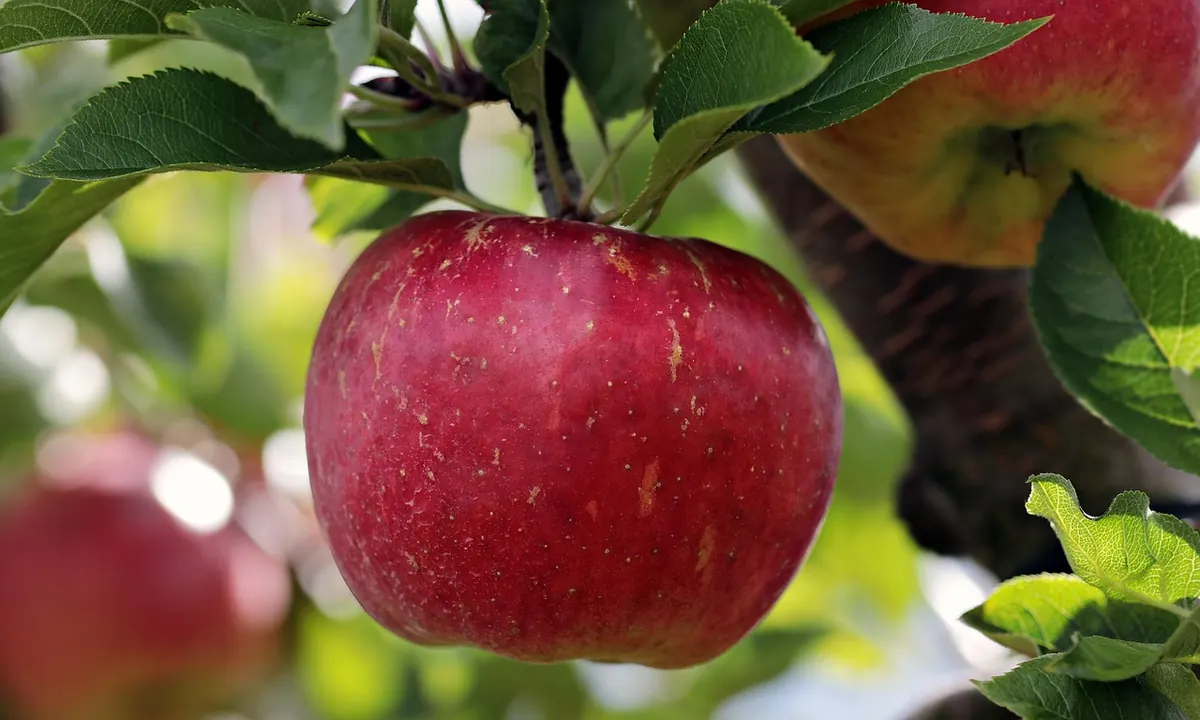
Photo: pixel2013 / Pixabay