An apple that has just left the branch looks tough. It isn't. The skin is a thin, living membrane, and the flesh beneath it is mostly water held inside fragile cells. Press a thumb in, let fruit drop half a metre into a bucket, or let one apple land on another, and those cells burst. The injury may not show for a day or two, but the fruit has already begun to brown, soften, and invite rot. Good harvesting is less about speed than about a handful of habits repeated without exception, from the moment your hand closes around the fruit to the day you lift it out of the crate.
Read the fruit before you touch it
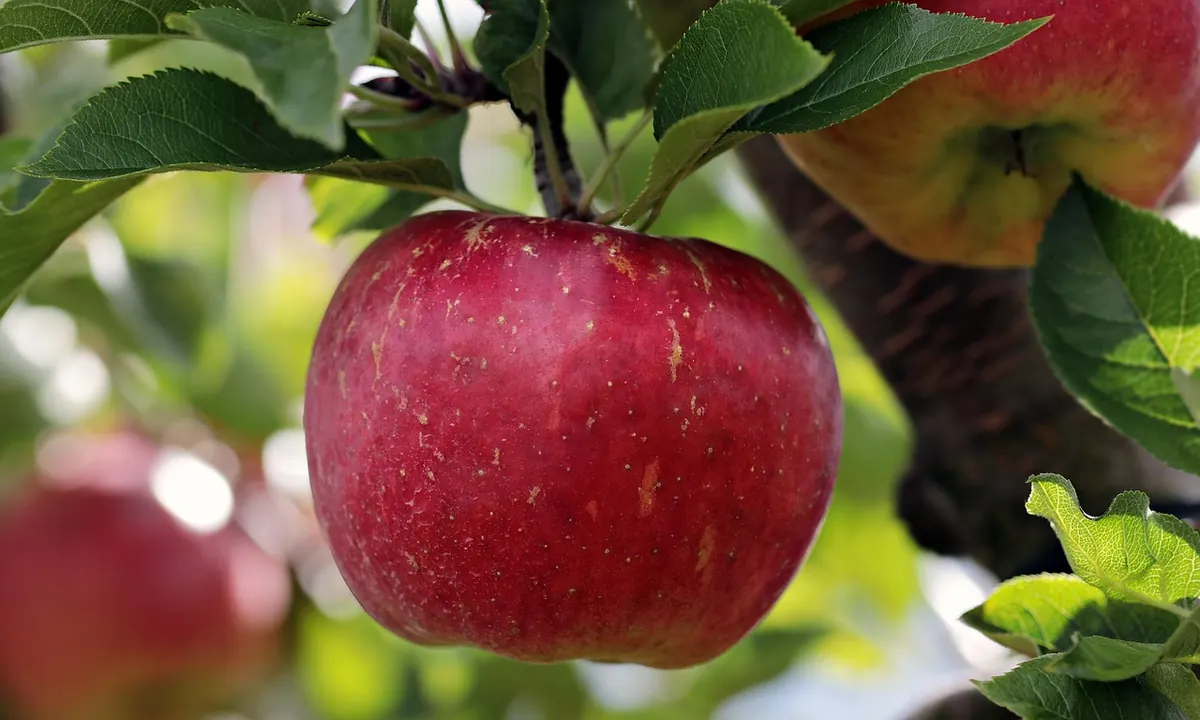
Picking at the right moment does more for bruise-free storage than any amount of careful carrying. An underripe apple clings to the spur and forces you to pull; an overripe one bruises almost at a glance and will not keep. Look for the background colour changing from grass-green to a paler, yellowish green, and for the deeper blush that develops on the sun side. Check a few seeds: dark brown usually means the fruit is close. Then use the only test that really counts — pick one, bite into it, and judge the flavour and the snap of the flesh.
The tree itself will tell you. Cup a fruit and lift it gently. If it separates with a small twist, it is ready. If it resists, leave it and come back in three or four days. Windfalls are a warning rather than a harvest: a few clean, ripe drops usually mean the first pick is due, while a scatter of half-eaten or shrivelled fruit is telling you something else entirely.
Time of day matters too. Pick in the morning once the dew has dried, or in the cool of the late afternoon. Fruit gathered in the heat of midday carries field heat into the crate and softens faster. Never pick wet apples for storage; moisture on the skin is an invitation to fungal trouble.
The lift and roll, not the pull
Most bruised fruit is damaged by the person picking it, not by the tree. The technique is simple and worth repeating to anyone helping you.
- Cup the apple in the palm of your hand, fingers spread underneath so the fruit is supported, not squeezed between fingertips.
- Lift the fruit slightly upward and roll it back towards the spur. A ripe apple parts at the natural joint with a soft click you can feel more than hear.
- Keep the stem on. A stemless apple is a small spear in the crate, and it will puncture the neighbour it lands against.
- Bring the fruit down to the container instead of dropping it. The old rule of thumb is worth keeping: an apple should never fall further than the width of your hand.
- Place, don't toss. Set each apple down and let the next one settle beside it.
On higher branches, use a picking bag hung in front of you rather than stretching to reach a basket on the ground. If you need a ladder, keep both hands free by working from a bag, move it only when you are standing on firm ground, and never lean out past the stiles. It is cheaper to leave a few apples at the top for the birds than to test your balance.
Containers make or break a harvest
The bucket is the quiet enemy of home orchards. Deep, rigid, and often unlined, it turns a gentle pick into a tumble down a plastic slope. Choose shallow crates, wooden or plastic, no more than about 30 to 40 centimetres deep, and line baskets with a cloth or a sheet of soft paper.
- Shallow crates with ventilation slots keep fruit cool and let you see damage early.
- Wicker baskets are excellent for picking, provided the inside is smooth or lined.
- Cardboard boxes work for transport if they are sturdy and have air holes; they soften and collapse if they get damp.
- Plastic bags, sealed tubs, and deep buckets trap moisture and heat — fine for ten minutes, wrong for a day.
- One container for perfect fruit, one for anything you plan to eat soon, and one for windfalls and damaged fruit.
That last point saves whole crates. A single split or rotting apple gives off ethylene and spreads mould to everything touching it, so the imperfect fruit should leave the orchard in its own box.
Field handling: the first hour matters most
Once picked, get the fruit out of the sun. A crate left in a warm shed or the back of a car loses days of shelf life for no reason. Move it to the coolest shaded spot you have, stack crates no more than two or three high, and keep them off damp ground. Never carry a full crate wedged against your hip while climbing steps, and never slide a crate across a rough surface; the vibration alone is enough to bruise the bottom layer.
Resist the urge to wash the apples. A dry wipe with a soft cloth is enough for dust, and the natural bloom on the skin is a thin protective layer worth preserving. Washing adds moisture to the stem cavity, which is exactly where rot begins.
Short-term storage that keeps fruit crisp
Crispness comes down to two conditions: cold and humid. A cellar, an unheated garage corner, or the vegetable drawer of a refrigerator can all work, as long as the temperature stays stable somewhere between about 0 °C and 4 °C and the air does not dry the fruit out.
In the refrigerator
Use the crisper drawer or a shelf towards the bottom. Set fruit in a single layer or two, in a shallow box, or in paper bags with a few holes punched in them. Seal nothing airtight — a little air movement keeps condensation from forming on the skins. Keep apples away from strong-smelling foods, since they absorb odours readily.
In a cellar or cool room
Wooden slatted crates on a shelf, a few centimetres off the floor, with space between them for air to move. Put a thermometer where you can read it at a glance, and cover the crates with a light cloth if the air is very dry. Watch for the first frost: freezing damages the flesh and the fruit will collapse on thawing.
Check the store every week or so. Remove any apple that has softened, split, or started to spot, and eat the small fruit first — it never keeps as long as the large, well-coloured ones. Early summer apples are thin-skinned and short-lived by nature; treat them as fruit for the next fortnight, not the winter.
A harvest-day routine worth repeating
Pick in the cool of the morning with a shallow crate and a picking bag on hand. Use two containers from the first tree, one for fruit with stems intact and one for anything damaged. Take the full crates straight to the shade, sort them once more in the evening under good light, and move only the sound apples into storage. It adds perhaps half an hour to a long day, and it is the difference between a bowl of firm, snapping apples in November and a crate of soft ones to compost in October.
Photo: congerdesign / Pixabay