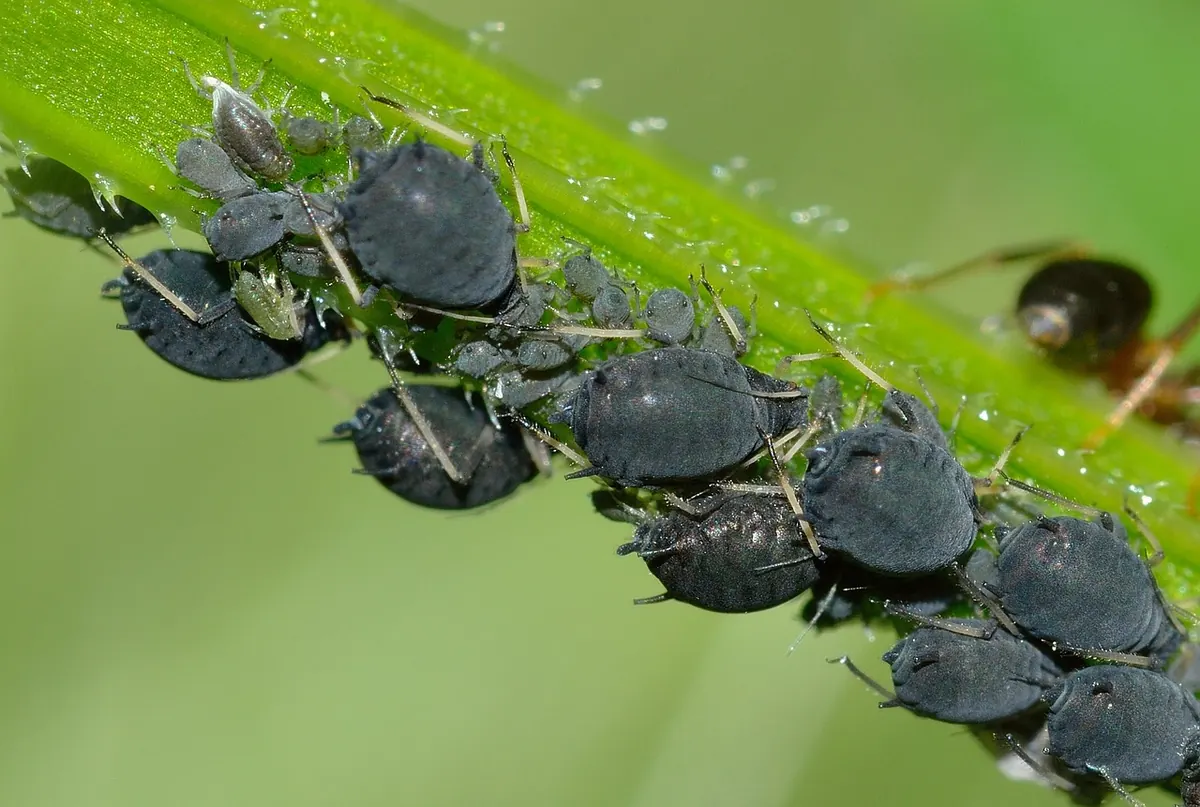
It usually starts with a shoot tip. You check a young apple tree in May and the topmost leaves are puckered, shinier than they should be, and slightly sticky if you touch them. Turn one over and there they are: a tight cluster of pale green insects lined up along the soft new growth. The reflex is to fill a sprayer and treat the whole tree, or the whole row. Resist it. Aphids are among the most manageable problems in a fruit garden, and the quickest way to make them worse is to spray broadly and wipe out the ladybirds, hoverflies and parasitic wasps that were already dealing with them. What follows is how to identify what you are looking at, judge whether it deserves action, and treat only the parts of the tree that need it.
First, identify the aphid
Not every aphid on a fruit tree behaves the same way, and the species tells you where to look and when. A hand lens helps, but location and timing usually give the answer.
- Green apple aphid clusters on soft shoot tips through late spring and summer. Leaves curl loosely and honeydew drips onto the ones below.
- Rosy apple aphid arrives earlier, often before bloom, and feeds deep inside the flower clusters. Its damage is the one that matters most: leaves roll tightly and developing fruit can end up small and distorted. If you see rolled clusters in April, look inside them.
- Woolly aphid looks like small patches of white cotton on bark, pruning wounds and the underside of branches rather than on leaves. Underneath the waxy fluff is a bluish-purple colony that is hard to wet with any spray.
- Black cherry aphid forms shiny dark clusters on cherry shoot tips; leaves curl downwards and young shoots can stall.
- Plum leaf-curling aphid produces the tightest curls of the group, on plum and damson shoots in spring, with the colony hidden inside the folded leaf.
Two other clues point to aphids even when you cannot see them. Ants walking up the trunk in a steady line are usually farming a colony for honeydew. And a black, sooty film on lower leaves is sooty mould growing on that honeydew, which means the infestation has been running for a couple of weeks.
Read the damage before you reach for anything
Walk the tree, not just the worst shoot. Part the tips at chest height and look at three or four places on each side. What you are checking for is spread, not existence.
- Curled or blistered young leaves, especially at the top of vigorous shoots.
- Sticky leaves and a faint sheen on fruit that has set.
- Cast skins: tiny white flakes caught in leaf axils and spider webs.
- Predators on site — ladybird larvae, brown lacewing larvae, hoverfly maggots, mummified brown aphid shells from parasitic wasps.
- Stunted extension growth compared with a neighbouring tree of the same age.
If you find a dozen aphids and two ladybird larvae on the same shoot, the balance is already tipping your way. If every tip on a two-year-old tree is solid with aphids and there is no predator in sight, that tree needs help.
Decide whether it matters
A mature apple or plum can lose a good share of its shoot tips in June and still crop and grow normally. Aphid feeding on established trees rarely justifies intervention unless it is heavy and spreading. Young and newly planted trees are a different case: they have little reserve, and a bad spring can set them back a season. The same goes for trees in pots, or those that were heavily pruned last winter and pushed a mass of soft growth — the kind aphids find irresistible.
Look at the crop, too. Rosy apple aphid distorting fruit in May is worth acting on. Green apple aphid on summer shoots, with predators present, usually is not. Write your decision down so you are not re-arguing it every weekend.
The low-impact toolkit, in order of force
Hands, water and secateurs
On a small tree, most early infestations can be removed in ten minutes. Rub colonies off shoot tips with a gloved thumb, or knock them off with a firm jet from a hose, repeating every few days. Where leaves are already tightly curled, prune the tip off and drop it into a bucket of soapy water rather than the compost heap. On woolly aphid, scrub the waxy patches with a stiff brush in winter and again in early summer; it is more effective than any contact spray.
Recruit the predators
Ladybirds, lacewings, hoverflies, earwigs and parasitic wasps do most of the work in an unsprayed garden. Encourage them with nearby flowering plants — umbellifers, marigolds, phacelia — and by tolerating a little untidiness. Avoid broad-spectrum insecticides entirely; they kill the predators more thoroughly than they kill the aphids, and the colony rebounds within a fortnight with nothing left to control it.
Cut the ant supply line
Ants protect aphids from predators and move them onto clean shoots. Band the trunk with a sticky barrier or a paper collar smeared with horticultural grease, refreshed every few weeks. Fit it snugly and check it for trapped beneficials, because a sticky band will catch as many ladybirds as ants if it is placed among low branches.
Soaps and oils, used precisely
Insecticidal soap and horticultural oil are the sensible middle ground, but they are contact materials: they must land on the insect to work, and they do nothing once dry. That means spraying the infested tips directly, at low pressure, until they are wet but not running off. Soap suits exposed colonies of green apple aphid; a summer oil is useful where you can reach the undersides of leaves. Avoid applying either in strong sun or when temperatures are high, and never spray open blossom, because pollinators are working those flowers.
- Check the forecast: no rain for six hours, no frost, no heatwave.
- Spray in the evening, when bees have stopped flying.
- Target the affected shoots only, not the whole tree.
- Re-check after four days and repeat once if live aphids remain.
- Stop as soon as predators are back in numbers.
Timing beats chemistry
The single most useful date in your diary is not a spray date but a scouting date. Start checking apple and plum trees as buds break, and cherry as the leaves open. Rosy apple aphid and plum leaf-curling aphid must be caught before the leaves roll over them, because no spray reaches inside a curled leaf. A delayed-dormant oil applied before bud break smothers overwintering eggs and is far less disruptive than anything you would use later. After that, evening treatments in the gap between petal fall and midsummer do the most good with the least collateral damage.
Things that make aphids worse
Heavy nitrogen feeding pushes soft, sappy growth and aphid numbers rise with it; feed fruit trees according to their vigour, not their enthusiasm. Hard pruning has a similar effect. Repeated use of the same product selects for resistance, so alternate between soap and oil rather than leaning on one. Spraying a whole orchard to deal with a few hot spots is the classic mistake: you spend money, lose your predators and buy yourself a second, larger infestation. Product availability and permitted uses vary by country and region, so read the label and, if you are unsure, ask your local advisory service before you mix anything.
A ten-minute walk once a week
Take the same route every week from bud break to midsummer: the youngest trees first, then the cropping trees, then a glance at the trunk bands. Turn a few shoot tips, look for ants and cast skins, and note where the colonies are. Deal with small hotspots by hand or with a spot spray the same day, then leave the rest alone and let the predators work. Nine times out of ten that weekly walk is the whole aphid programme, and the trees grow on without ever needing the sprayer filled.
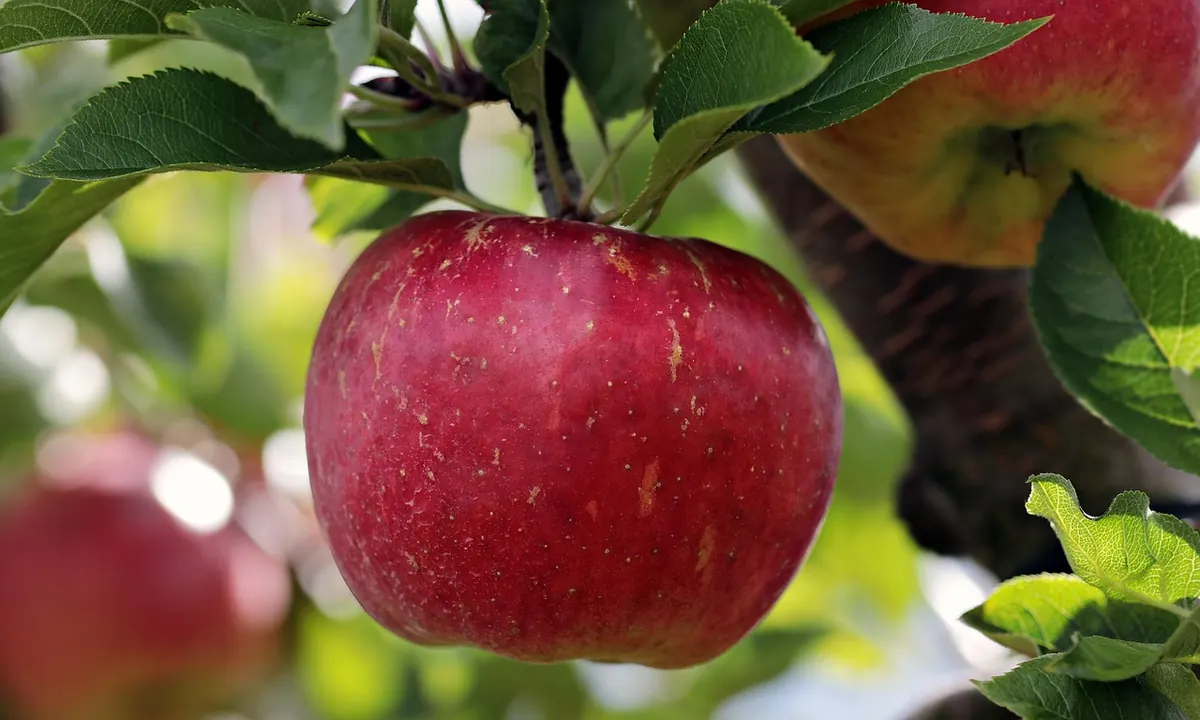
Photo: francok35 / Pixabay